
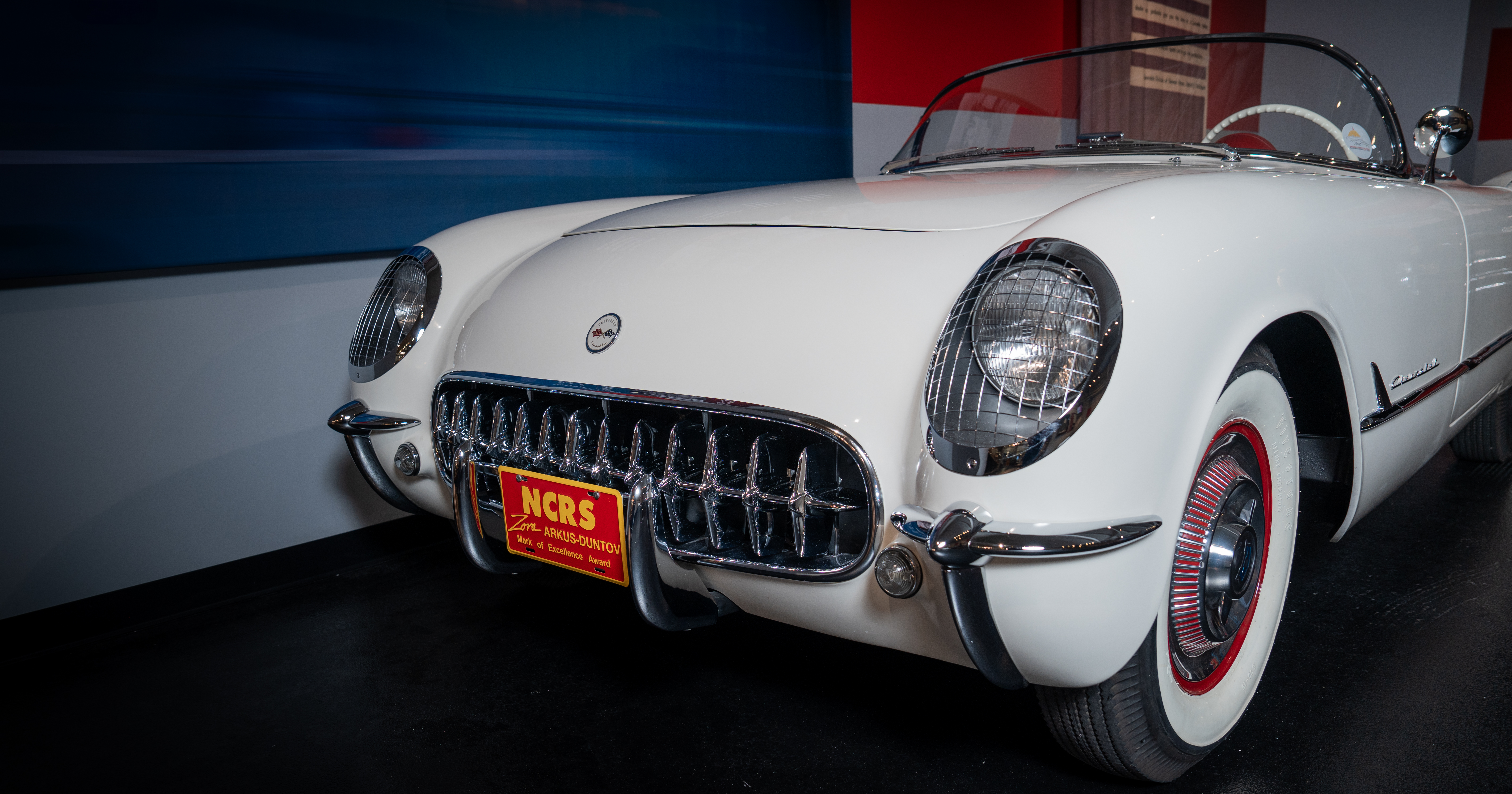
The Chevrolet Corvette debuted as a concept car at the 1953 GM Motorama in January. Visitors responded with enthusiasm. Chevrolet decided to put the car into production. The first Corvettes rolled off a temporary assembly line in Flint, Michigan, in June 1953. Only 300 units appeared that year, each hand-built and priced at $3,498.
Sales started slowly. By late summer, dealers reported customer hesitation. The car had a fabric top that leaked, no roll-up windows, and no exterior door handles. Its Powerglide automatic transmission and 150-horsepower Blue Flame six-cylinder engine did not match the performance many buyers expected from a sports car. Unsold 1953 models sat on dealer lots into the fall. Chevrolet executives began to question the future of the program. Production plans for 1954 called for 1,000 units per month, yet fewer than 200 cars had sold in the first six months. Some inside General Motors suggested canceling the Corvette before heavier losses occurred.
Motor Trend magazine published its December 1953 issue during this uncertain period. Inside, a multi-page road test written by technical editor Don MacDonald appeared. MacDonald drove a Corvette from Los Angeles to Yosemite and back. He praised the car’s fiberglass body, low weight, and precise steering. He noted the independent suspension provided handling that European sports cars struggled to match on American roads. Acceleration times and cornering ability received detailed attention. MacDonald acknowledged the side curtains and lack of roll-up windows, yet he presented these as acceptable trade-offs for a pure sports car design. The article included photographs of the Corvette on mountain roads and at high speeds. Comparison charts placed the Corvette against MG, Jaguar, and Triumph models. In most performance categories, the Chevrolet equaled or surpassed its imported rivals, often at a lower price.
Dealers later reported that customers brought copies of the Motor Trend issue into showrooms. Many buyers cited the article as a key reason for their purchase. Orders increased in early 1954. Chevrolet raised 1954 production from the original 1,000-unit plan to meet demand. The December 1953 Motor Trend coverage provided third-party validation at a moment when Chevrolet needed it most. Positive press from a respected automotive publication helped shift public perception. Buyers saw the Corvette as a credible competitor to established European brands.
Without the timing and tone of Motor Trend’s December 1953 coverage, the Corvette story might have ended after a single model year. Instead, the magazine’s endorsement gave Chevrolet the confidence and customer interest needed to continue production into 1954 and beyond. The Corvette enters its eighth decade because a magazine road test arrived when the car needed support most.
About the Museum
The National Corvette Museum, a 501(c)(3) not-for-profit foundation, is where Adrenaline Meets Tradition®. Located in Bowling Green, Kentucky, the Museum is dedicated to educating audiences on the evolution of the Corvette—America’s Sports Car—through the collection, preservation, and celebration of its legacy.


